

Surface Sand Detector
How it works
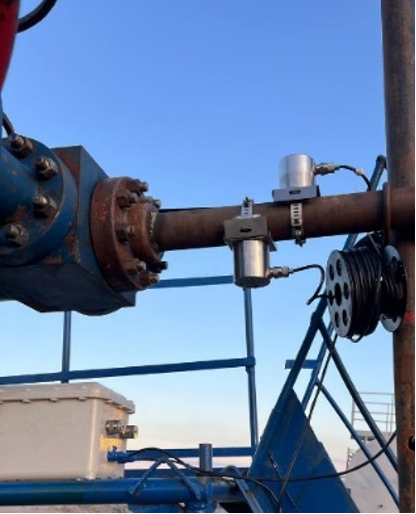
The NEO surface sand detector monitor is based on a unique technology developed by NEOWELL LLC specialists. The sensor is installed at the wellhead immediately after a 90-degree bend, where solid particles hit the inner wall of the pipe, generating acoustic vibrations. The acoustic signal is transmitted through the pipe wall and picked up by the NEO sensor.
The NEO sensor is supplied calibrated and the device does not require on-site calibration, it can simply be attached to the pipe wall. The patented NEO smart sensor processes the signal using artificial intelligence algorithms. The user can evaluate particle removal data in real time and make the decisions necessary for efficient well operation.

Advantages
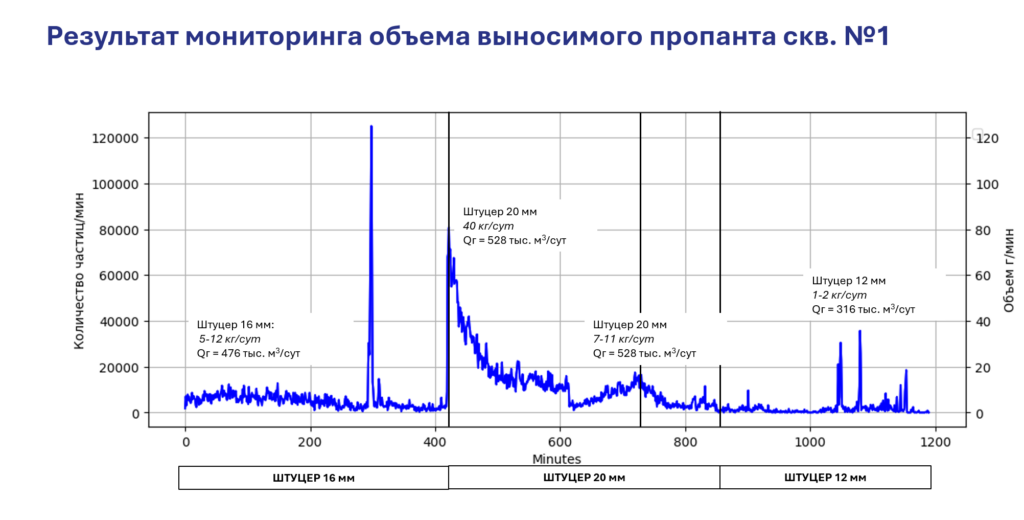
Sand blowout in oil and gas wells is a serious problem faced by oil and gas producers. The problem has been exacerbated in recent years by the massive use of hydraulic fracturing and proppant removal. The challenge is not only to avoid massive sand or proppant blowouts, but also to maximise equipment life, as even a small amount of particles in the flow can cause significant damage and failure of the wellhead fittings.
NEO sensors contain two synchronised sensors for reliable detection of sand and proppant removal in wells with different flow rates.
Artificial intelligence methods (self-learning neural networks) allow unmistakable distinction of solid particle impacts from liquid drops and other disturbances (rain, wind, equipment operation).
Artificial intelligence
The NEO system is characterised by artificial intelligence. The technology includes a library of noise accumulated in wells and in the laboratory, which is automatically updated with new data.
Integration
All our devices are equipped with both digital and analogue interfaces and comply with common protocols (Modbus RTU, 485). Our instruments can be easily integrated into the customer’s existing control system. Data is transmitted in real time and also stored on a flash drive.
Specifications:
Methods
Passive acoustics
Processing
Intelligent electronics inside the sensor unit with AI
Installation method
Non-invasive, fixed to the pipe surface, no tapping required
Minimum particle size*
25 microns
Minimum flow rate
8 g/hour
Minimum flow rate
0.5 m/s
Uncertainty
±20%
Repeatability
1%
Interface options
RS485 (ASCII, binary, ModBus RTU)
Two-way communication
Yes
Software update
Yes
Pipe surface temperature
– 40 °C – + 85 °C
Flow Modes
Oil, gas, water, multiphase
Explosion-proof case
0 Ex ia
Sensor material
Stainless steel
Size
ø80 mm x 144 mm [ø3,1” x 5,7”]
Sensor weight
3 kg
Power consumption
Макс. 2,2 Wt